
WHAT PILATES IS…
AND WHAT IT’S NOT.
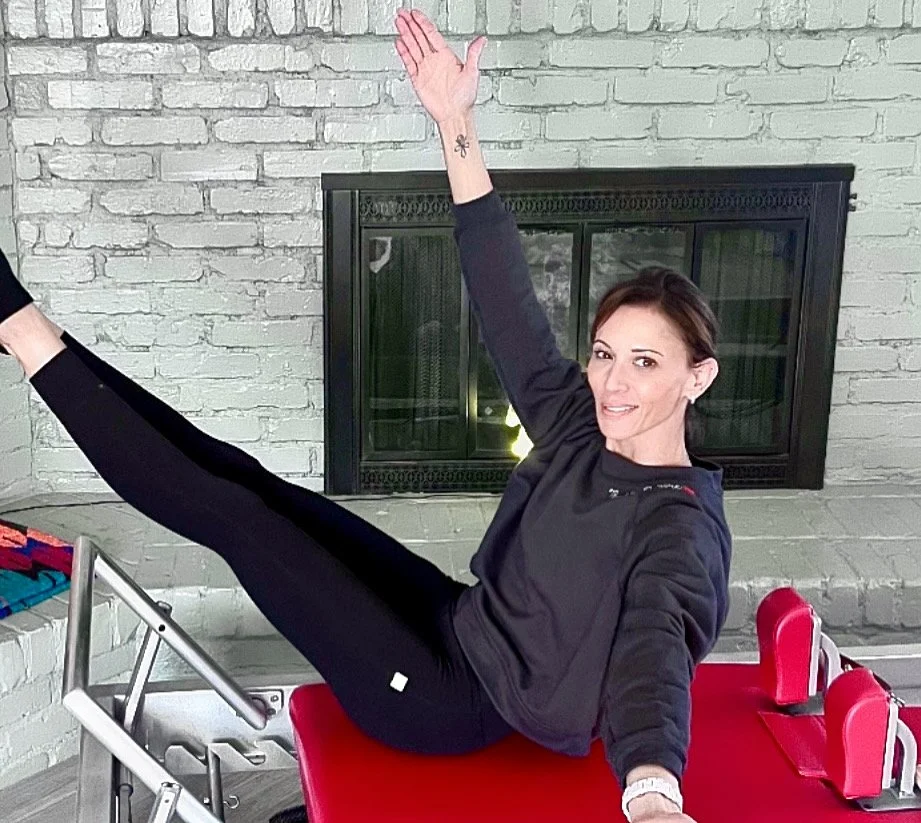
You've heard the word. Maybe you've seen the reformer machines and wondered what on earth they do. Maybe a friend swears by it but couldn't quite explain it. Let me break it down for you — no jargon, no intimidation.
Pilates was created by a man named Joseph Pilates, born in Germany in 1883. As a sickly child — dealing with asthma, rickets, and rheumatic fever — he became obsessed with understanding the human body and what it needed to truly thrive. He studied boxing, gymnastics, yoga, and martial arts, and began developing his own system of movement he called Contrology — the complete coordination of body, mind, and spirit.
During World War I, he worked with injured soldiers and bedridden patients, attaching springs to hospital beds so they could exercise while lying down. That's the origin of the reformer you see in studios today.
He eventually opened a studio in New York City in the 1920s, where dancers — particularly from the New York City Ballet — became devoted followers. They found that Pilates built the strength, flexibility, and body awareness they needed without the bulk or injury risk of traditional weight training.
Nearly a century later, the method has evolved — but its core principles remain exactly as Joseph intended.
The Six Core Principles
Every Pilates exercise is built on six foundational principles. Understanding them helps you understand why this method works so differently from anything else you've tried.
Concentration
Pilates demands your full attention. You're not zoning out to a podcast — you're tuned in to exactly what your body is doing, which muscles are firing, and how each movement feels. That focus is part of what makes it so effective.
Control
Joseph Pilates called his method Contrology for a reason. Every movement is deliberate and controlled — never rushed, never sloppy. This protects your joints and trains your nervous system to move with precision.
Centering
All movement originates from your center — what Pilates calls the "powerhouse": your deep abdominals, lower back, hips, and pelvic floor. Strengthening this foundation is what creates the posture, stability, and ease of movement that Pilates is known for.
Breath
Breath is not an afterthought in Pilates — it's built into every exercise. Proper breathing oxygenates your muscles, supports your core, and keeps your nervous system calm. Many clients say the breathing alone changes how they feel.
Precision
One perfectly executed movement is worth more than ten sloppy ones. Pilates prioritizes quality over quantity — which is why a 55-minute session can leave you feeling more worked than an hour at the gym.
Flow
Pilates exercises are designed to move with grace and fluidity — not as isolated reps, but as connected, flowing sequences. That flow is what makes Pilates feel like both a workout and a moving meditation.
Mat vs. Reformer — What's the Difference?
Pilates is practiced in two main formats — and both have a place in a well-rounded practice.
Mat Pilates uses your own bodyweight as resistance. It's accessible anywhere, requires no equipment, and is a powerful practice in its own right. Many of Joseph Pilates' original exercises were mat-based.
Reformer Pilates uses a spring-resistance machine that looks a bit like a sliding bed with a footbar and straps. The springs provide both assistance and resistance — meaning the reformer can make exercises easier or harder depending on how it's set up. This makes it uniquely adaptable to any body, any fitness level, and any limitation. For women in midlife dealing with joint concerns, balance issues, or returning from injury, the reformer is often the most effective place to start.
In my studio, we work on both — tailored entirely to you.
Is Pilates a Cardio Workout?
Pilates is primarily a strength and mobility practice, not a cardiovascular workout in the traditional sense. That said, a well-paced reformer session will elevate your heart rate, challenge your endurance, and leave you genuinely tired in the best possible way.
For midlife women, this is actually ideal. High-impact cardio puts stress on joints that are already navigating hormonal changes. Pilates builds the lean muscle mass that raises your resting metabolism — which means you're burning more calories all day long, not just during your workout.
A Note From Me
I want to be honest with you: I came to Pilates not as a fitness enthusiast, but as someone who needed it. After brain surgery and the complications that followed — balance dysfunction, nerve damage, recovery — Pilates was the thing that gave me my body back. And then gave me more than I ever had before.
That's what I want for you. Not just a workout. A practice that becomes yours — that you carry with you through every season of your life.
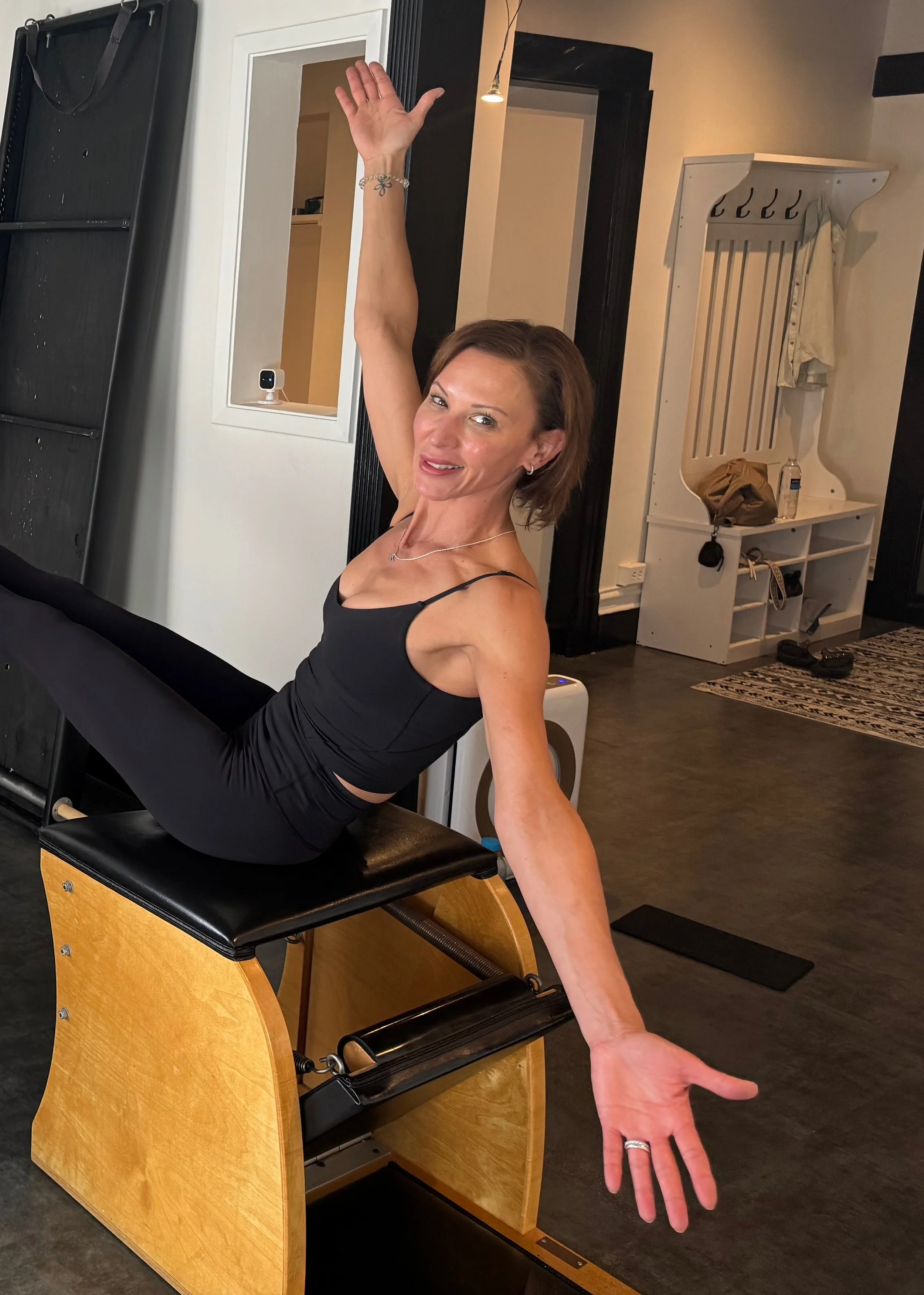
Something shifts in your 40s and 50s. You already know that. What you may not know is that the shifts happening hormonally — the decline in estrogen and progesterone that defines perimenopause and menopause — have direct, measurable effects on your muscles, your bones, your metabolism, and your balance. And Pilates addresses all of it.
This isn’t your daughter’s workout
Pilates is one of the most effective tools available for women in midlife — and most women don't find out until they're already in it.
Why pilates is good for women in midlife
Pilates is a method of mindful movement developed in the early 20th century by Joseph Pilates. It focuses on building strength from the inside out — training the deep stabilizing muscles of your core, spine, hips, and shoulders that most conventional exercise completely ignores.
It's practiced on a mat or on specialized equipment called a reformer — a spring-based machine that provides both resistance and support, making it adaptable to any body and any fitness level. You don't need to be flexible to start. You don't need any experience. You just need to show up.
What makes Pilates different from other forms of exercise isn't just what it works — it's how it works. Every movement is intentional. Every breath matters. The result is a practice that builds real, functional strength while also calming your nervous system, improving your posture, and reconnecting you to your body in a way that feels genuinely good.
Muscle loss — fought back Women can lose 3–8% of muscle mass per decade after 30, and that rate accelerates after menopause. Pilates builds and maintains lean muscle through resistance-based movement — protecting your metabolism, your strength, and your independence.
Balance and stability — restored Falls become a real risk as estrogen drops and proprioception — your body's sense of where it is in space — declines. Pilates directly trains the stabilizing muscles and neuromuscular connections that keep you steady, grounded, and confident in your body.
Bone density — supported Weight-bearing and resistance exercise is one of the most evidence-backed ways to slow bone density loss. Pilates, especially on the reformer, provides exactly that — in a joint-friendly, low-impact format that works even if running or lifting isn't right for your body
Posture and pain — addressed The postural changes of midlife — rounded shoulders, compressed spine, tight hips — aren't inevitable. Pilates systematically opens and lengthens what's been shortened by years of sitting, stress, and hormonal change. Many clients notice less back and hip pain within just a few weeks.
What makes this different?
Most Pilates classes are taught by movement specialists. What you get here is something rarer — a Nationally Certified Pilates Teacher who is also a Registered Dietitian Nutritionist with a Master's degree in nutrition science.
That means when we work together, your movement practice and your nutrition are finally speaking the same language. We look at how you're fueling your body to support muscle building and bone health. We talk about protein, about calcium, about the things that make your Pilates practice actually stick at a cellular level.
No other hour of your week does all of that.
Common Questions
Do I need experience? Not at all. Many of my clients come in having never done Pilates before. We start where you are.
Is it hard on the joints? Pilates is one of the most joint-friendly forms of exercise available. The reformer in particular provides spring resistance that supports your body while challenging your muscles — making it ideal for women with knee, hip, or back concerns.
How soon will I notice a difference? Joseph Pilates famously said: "In 10 sessions you'll feel the difference. In 20 you'll see the difference. In 30 you'll have a whole new body." Most clients notice improved posture, less tension, and better energy within the first few weeks.
Do you work with complete beginners? Yes — and I love working with beginners. There's nothing more rewarding than watching someone discover what their body is truly capable of.
You've spent decades showing up for everyone else. This is how you show up for yourself.